
Family therapy in El Masnou and online
Family therapy
A space to understand what is happening in your family, improve communication and find new ways of relating to one another.
In person in El Masnou or online.

when family bonds become a source of distress
Perhaps you love each other, but lately you find it hard to understand one another.
Conversations end in arguments, reproaches or silences appear, and you feel that, however hard you try, you keep coming back to the same point.
Sometimes the conflict centres on the relationship between parents and children. At other times it has to do with differences in parenting, difficulties between siblings, separations, losses or changes that have upset the family balance.
One person may be expressing more distress than the others, but that does not mean they are responsible for what is happening.
At Calma de Ser we offer you a space to understand what is happening in your family, listen to the different needs and find ways of relating that create more well-being.
It is not about finding someone to blame or deciding who is right, but about understanding what is happening between you and what each person needs in order to feel heard, respected and taken into account.
family therapy can help if…
You may consider family therapy if:
- Arguments and conflicts keep repeating and you cannot find a way to resolve them.
- You feel it is hard to talk without ending in reproaches, anger or silence.
- There are difficulties in the relationship between parents and children.
- Living together has become tense or draining.
- There are major disagreements about parenting, rules or boundaries.
- A family member feels misunderstood, excluded or not listened to.
- There are conflicts between siblings.
- You are going through a separation, a loss or a family reorganisation.
- You find it hard to adapt to a new stage, such as adolescence or the arrival of a new family member.
- There are tensions related to the families of origin.
- One member’s emotional difficulty is affecting family life.
- You want to improve your family relationship before conflicts grow.
You do not need to wait until the situation is unbearable to ask for help.
Sometimes having a space to pause, listen to each other and understand what is happening makes it possible to start changing dynamics that have been repeating for a long time.
what we work on in family therapy
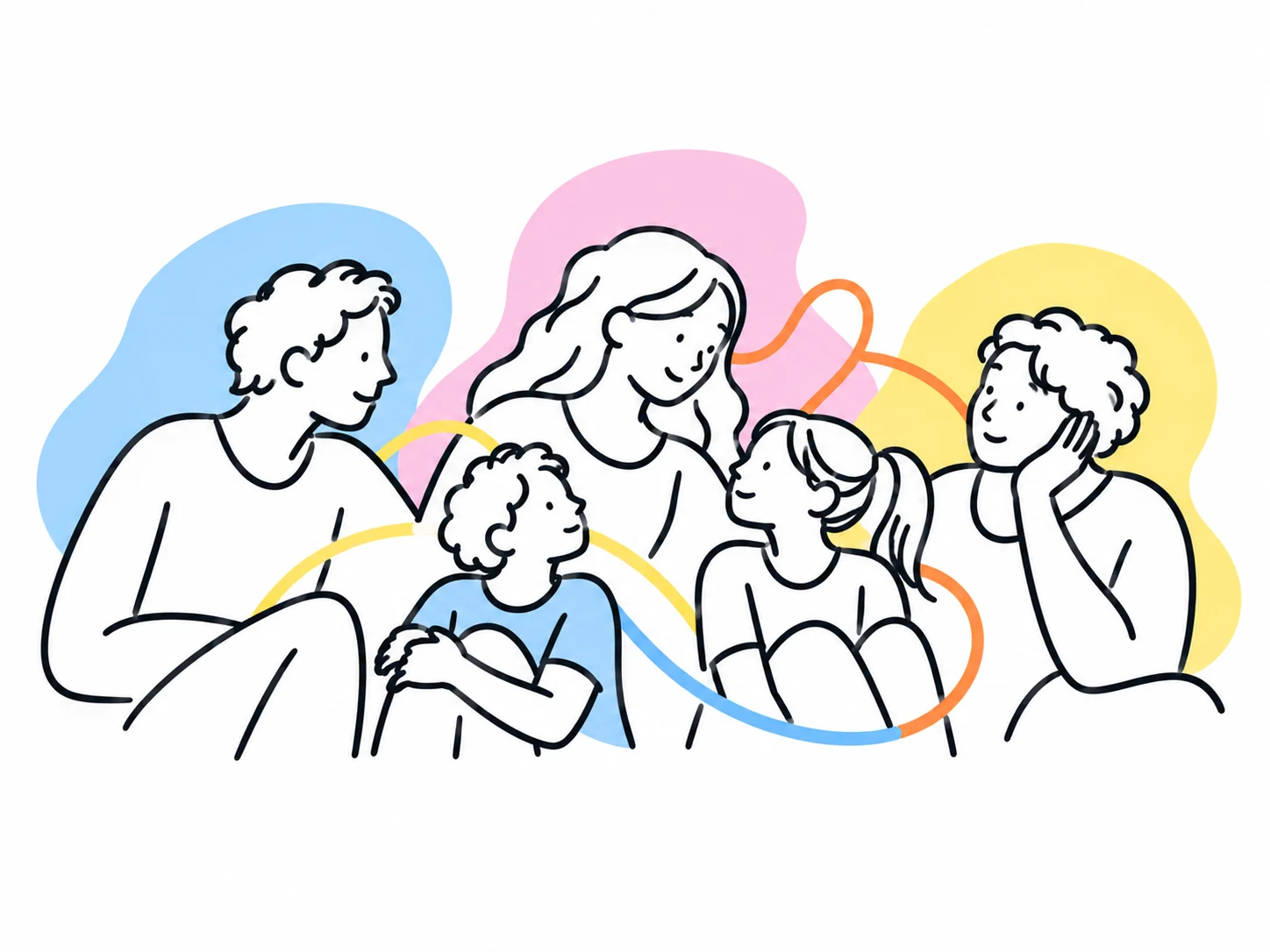
Understanding family dynamics
Every family develops its own ways of communicating, organising itself and facing difficulties.
We help you identify what happens when a conflict appears, how each person responds and which dynamics may be keeping the distress going.
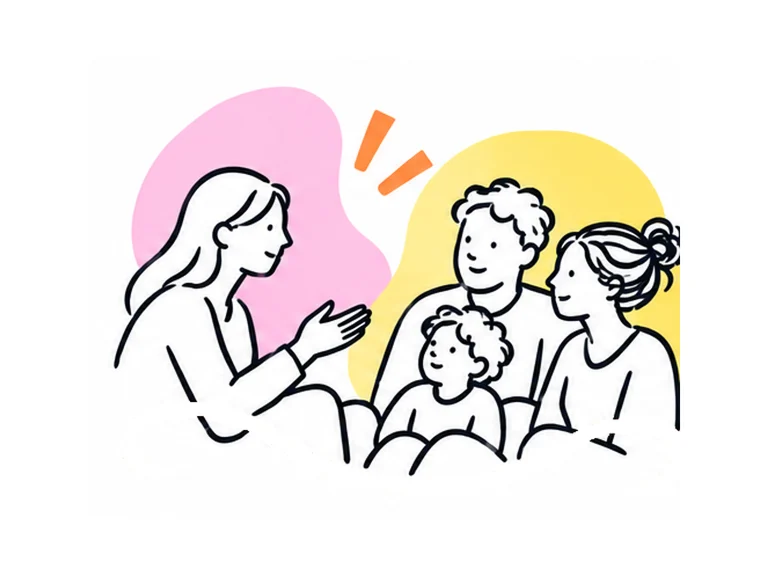
Communication and listening
We work so that you can express what you feel and need more clearly, and listen to the others’ experiences without automatically going into defence, criticism or attack.
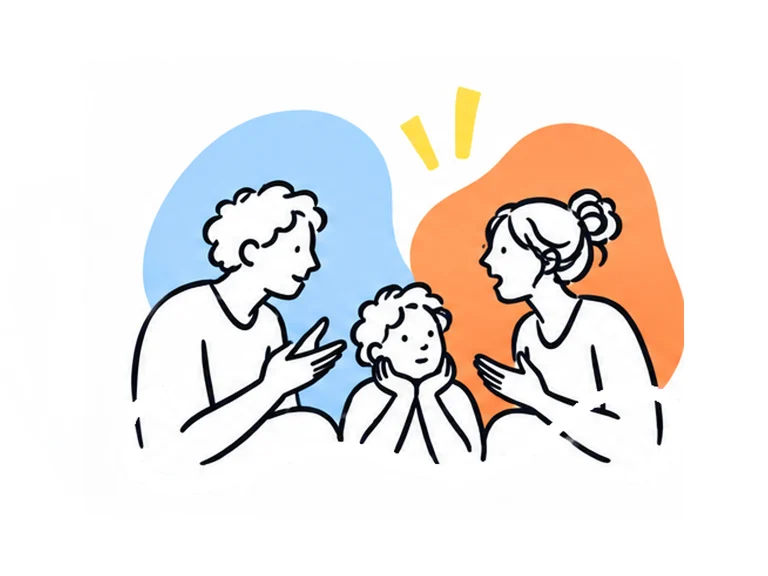
Conflicts and living together
We address repeated arguments, disagreements and everyday difficulties, looking for new ways to manage differences and build workable agreements.
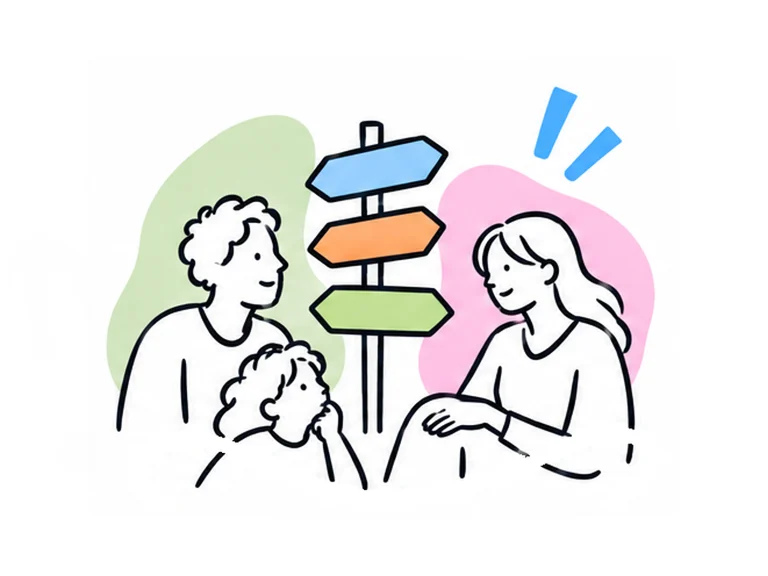
Boundaries, roles and responsibilities
We explore how roles are distributed within the family, what responsibilities each person takes on and how to set boundaries that encourage clearer, more respectful relationships.
Parenting and adolescence
We support families with parenting difficulties, differences between caregivers, conflicts with children or changes related to their growth and autonomy.
Discover parenting guidance →
Changes and life stages
Separations, new partners, blended families, losses, illness or major changes can alter the family balance.
We help you understand how each person is experiencing these changes and what you need to adapt to the new situation.
Family bonds and wounds
Sometimes there are painful experiences, old conflicts or feelings that have never been expressed.
We work to help you understand them, recognise their impact and explore whether new ways of bonding can be built.
how we understand family therapy
We are not looking for someone to blame. We look at what happens between you.
In a family, what one person goes through affects the others.
Sometimes a child expresses their distress through anger, withdrawal or behavioural difficulties. A mother or father may respond by trying to control the situation more, while another person pulls away to avoid conflict.
Every reaction makes sense within a story and a context, but some ways of relating can end up creating even more distance and suffering.
In family therapy we do not try to point at who has the problem.
We want to understand what is happening, how each person experiences it, what they are trying to protect and what they need in order to relate differently.
We also pay attention to the different life stages, the needs for autonomy and belonging, and how to find a balance between individual and family well-being.
We understand that taking care of bonds does not mean always agreeing, avoiding conflict or staying together at any price.
It also means being able to differentiate, set boundaries, respect each person’s needs and find ways to stay connected without ceasing to be yourself.
Our aim is to support you in building more conscious, secure and respectful family relationships.
how to start family therapy
First family therapy session
In family therapy there is no prior 25-minute assessment.
The first session is scheduled directly with the specialist professional and lasts 90 minutes.
During this meeting we can learn what brings you here, how each person experiences the situation and what you would like to change.
We will also begin to understand the family dynamic and define some first goals.
Not all family members need to agree on what is happening.
In fact, one of the aims of this first meeting is to give room to the different views and consider how we can support you.
Depending on the situation, the children’s ages and the therapeutic goals, we may recommend that certain family members take part or propose different session formats.
First visit
request a first visit for family therapy
Fill in the form and we will assess which professional can support you according to your situation and availability. The therapist will contact you by WhatsApp or phone to schedule the first visit.
In family therapy you do not need to book a 25-minute assessment session first. We will contact you to schedule the first visit directly with the specialist professional.
We have a question before we start
You can write to us on WhatsApp and ask with no obligation. We would rather answer a question than leave you with it.
Tell us what you need
You do not need to know which therapy or which professional to choose. We will help you find your way.
25 minutes · €36 · In person in El Masnou
Choose a day
Loading the calendar…
Choose a time
Couples therapy has its own process
It does not start with the first assessment appointment: the first step is different. On its page we explain how it works, and you can book directly.
Thank you, we have received your request
We have received your request. The therapist will contact you by WhatsApp or phone to find out your availability and arrange the first visit.
Neuropsychology has its own process
It does not start with the first assessment appointment: the first step is different. On its page we explain how it works, and you can book directly.

- Therapist
Tania Plaza Martínez
Systemic therapist · Couples and family therapy · Support for adults and adolescents
- Languages
- Spanish · Catalan
- Format
- In person in El Masnou · Online
frequently asked questions about family therapy
Do all family members have to attend?
Not necessarily.
It will depend on the situation and the goals of the process. In some cases it is advisable for the whole family to take part; in others it may be more appropriate to work with certain members.
The therapist will advise you on the most suitable format.
What if one family member does not want to come?
It is common for not everyone to be equally willing to take part.
We can consider how to start with those who do want to come and what work is possible, without forcing anyone to take part.
Is family therapy only for families with young children or adolescents?
No.
Family therapy can also help with relationships between adults in the same family, such as parents and adult children, siblings or other family bonds.
Will the therapist decide who is right?
No.
The therapist’s role is not to judge or take sides, but to help you understand the different experiences and identify the dynamics that create distress.
This does not mean justifying harmful behaviour or ignoring each person’s responsibilities.
What if the problem seems to lie with one of our children?
In family therapy we do not start from the idea that one person is the problem.
We explore what their distress may be expressing, how the family context influences it and what resources can help.
If necessary, we can also consider individual psychological support.
Are there individual sessions?
The focus of family therapy is on family relationships and dynamics.
At certain points, the professional may propose separate meetings with some members, as long as they make sense within the process and the appropriate agreements are made.
How long does family therapy last?
It depends on the situation, the goals and the needs of each family.
Some families need brief support to face a specific difficulty, and others need more time to transform dynamics that have been present for years.
Is family therapy useful if we are going through a separation?
Yes.
It can help you manage the family changes, improve communication and attend to the children’s emotional needs, especially when there are difficulties reaching agreements or reorganising daily life.
you can begin by understanding what is happening in your family
You do not need to be clear about what the problem is or know how to solve it.
Sometimes the first step is to find a space where you can talk about what is happening without repeating the same arguments.
At Calma de Ser we help you understand your story, listen to the different needs and explore new ways of relating.