

About us
About Calma de Ser
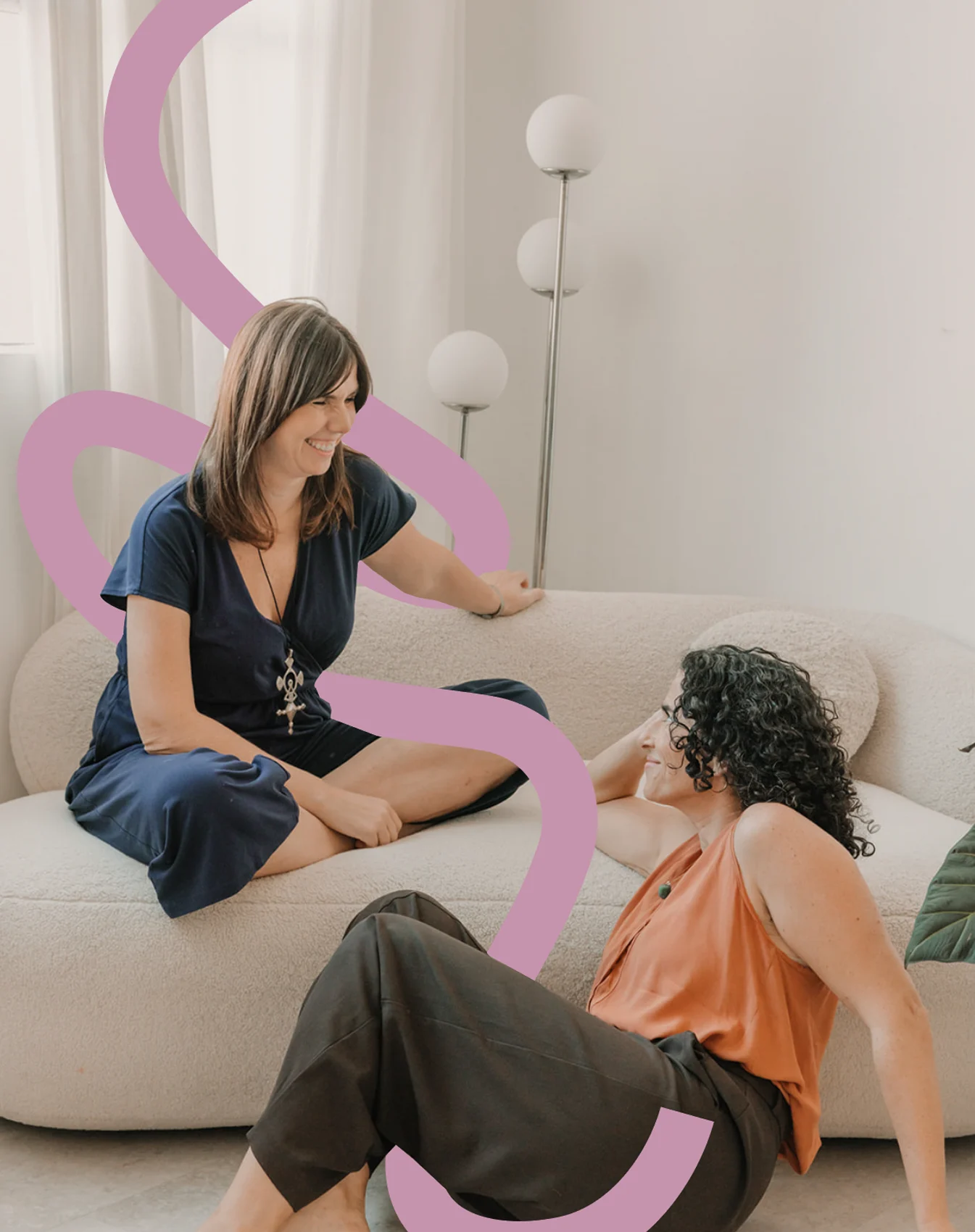
We are Marta and Laura
Psychologists, psychotherapists and co-founders of Calma de Ser.
We share a way of looking at psychotherapy: close, rigorous and deeply respectful of each person’s story.
We believe that nobody can be explained only through a diagnosis, a symptom or a difficult period. Behind what is happening to you there is a story, relationships, a body, emotions and your own way of having learned to hold life.
Calma de Ser was born to offer you a space to pause, understand what is happening to you and begin to relate to yourself differently, including in the challenges of your daily life.
- Format
- In person in El Masnou · Online
- Languages
- Spanish · Catalan
In person in El Masnou · Online · Spanish · Catalan
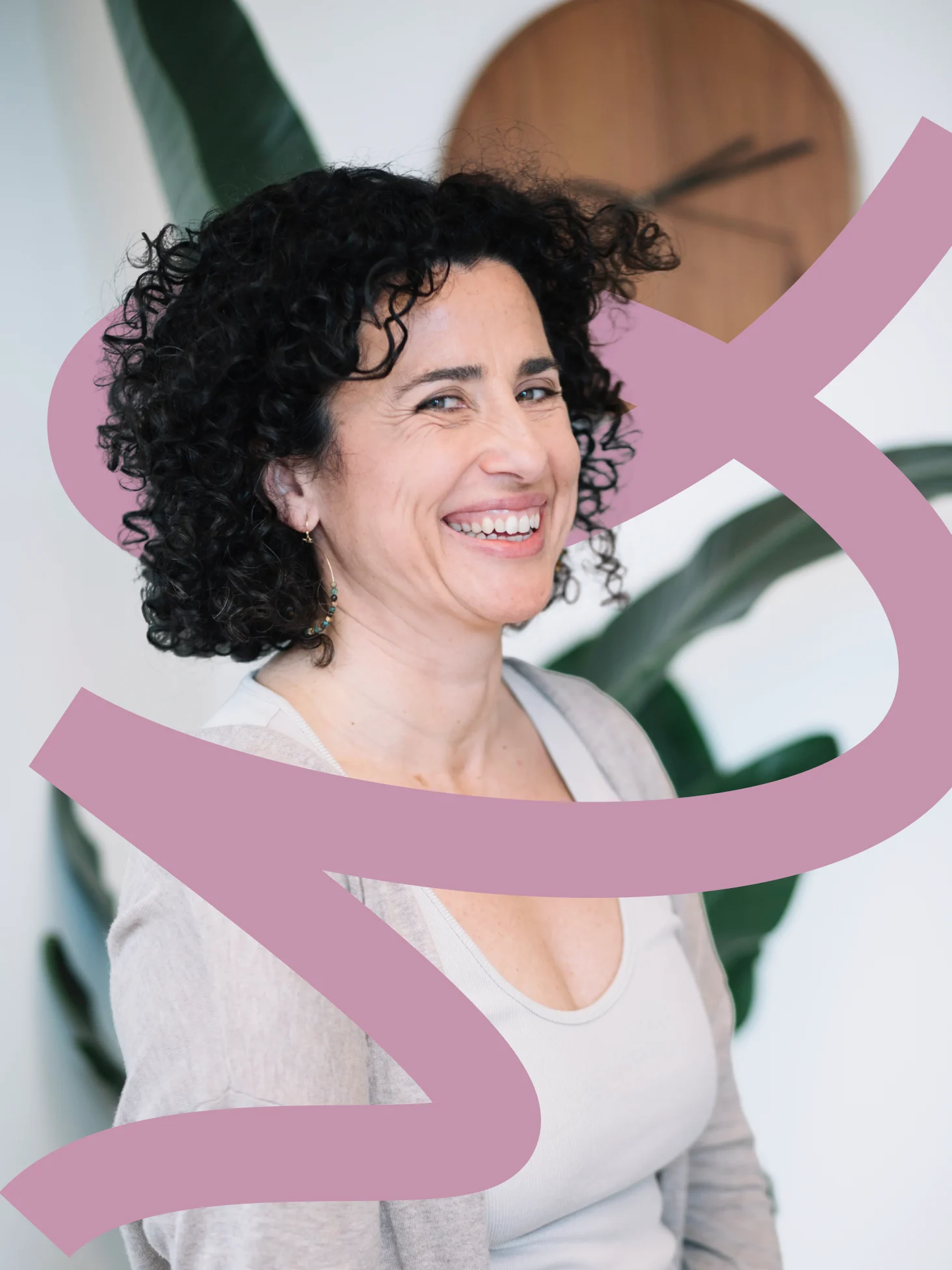
Marta Tarrida Tinoco
Beginnings are not always what you expect. It may surprise you, but I chose to study Psychology by chance. I wanted to do Audiovisual Communication, and I put Psychology down as my fourth choice. Out of pure curiosity, to understand human behaviour.
I even started a PhD in audiovisual studies, without a very clear direction, and although everything was going well, a family event changed the course of my life completely. I felt sad and, above all, very afraid. Life was inviting me to take the reins, and it was not easy at all.
Despite feeling lost, I felt deep inside that I was beginning to be the protagonist of my own life.
I decided to take over the family business together with my sister and, despite being very afraid, I made decisions. One of them was to let myself be supported in therapy. I had learned that I had to be strong, but at last I dared to embrace my vulnerability.
I learned more about myself, digested everything I had lived through and fell in love with the profession of psychology, thanks to discovering Transactional Analysis. My psychotherapist ended up being my mentor and, after a three-month journey through South America, I ended up doing a placement at his Institute in Buenos Aires. I found a guide, someone who helped me confirm within myself that I was capable.
I came home and decided to keep training. I took a four-year master’s in psychotherapy, and did a placement at a university hospital in the OCD Unit as part of another postgraduate programme, in order to train in this art of practising psychotherapy. After further training and learning, I began to truly find myself professionally.
I began to practise as a psychotherapist, and felt I had found my vocation. At the same time, I kept investing in my personal development, meeting my current partner along the way and growing together as parents of two wonderful children.
I have been working as a psychologist and psychotherapist for more than 19 years. I support mental health processes from a close, rigorous and respectful perspective. My focus now is on supporting anyone who wants to know themselves better, or who feels confused and wants to bring more awareness and intention to their current process. Out of a wish to improve relationships in the workplace, I trained as a team coach, and together with Mónica Jal I set up EMA2 to contribute to well-being at work. I am a trainer on psychology courses for the Diputació de Barcelona, and I work with the Fundación Salud y Persona.
For me, life is therapy, and I offer you sincere support from my own humanity, to walk a little stretch of your path with you.
- Format
- In person in El Masnou · Online
- Languages
- Spanish · Catalan · English
In person in El Masnou · Online · Spanish · Catalan · English
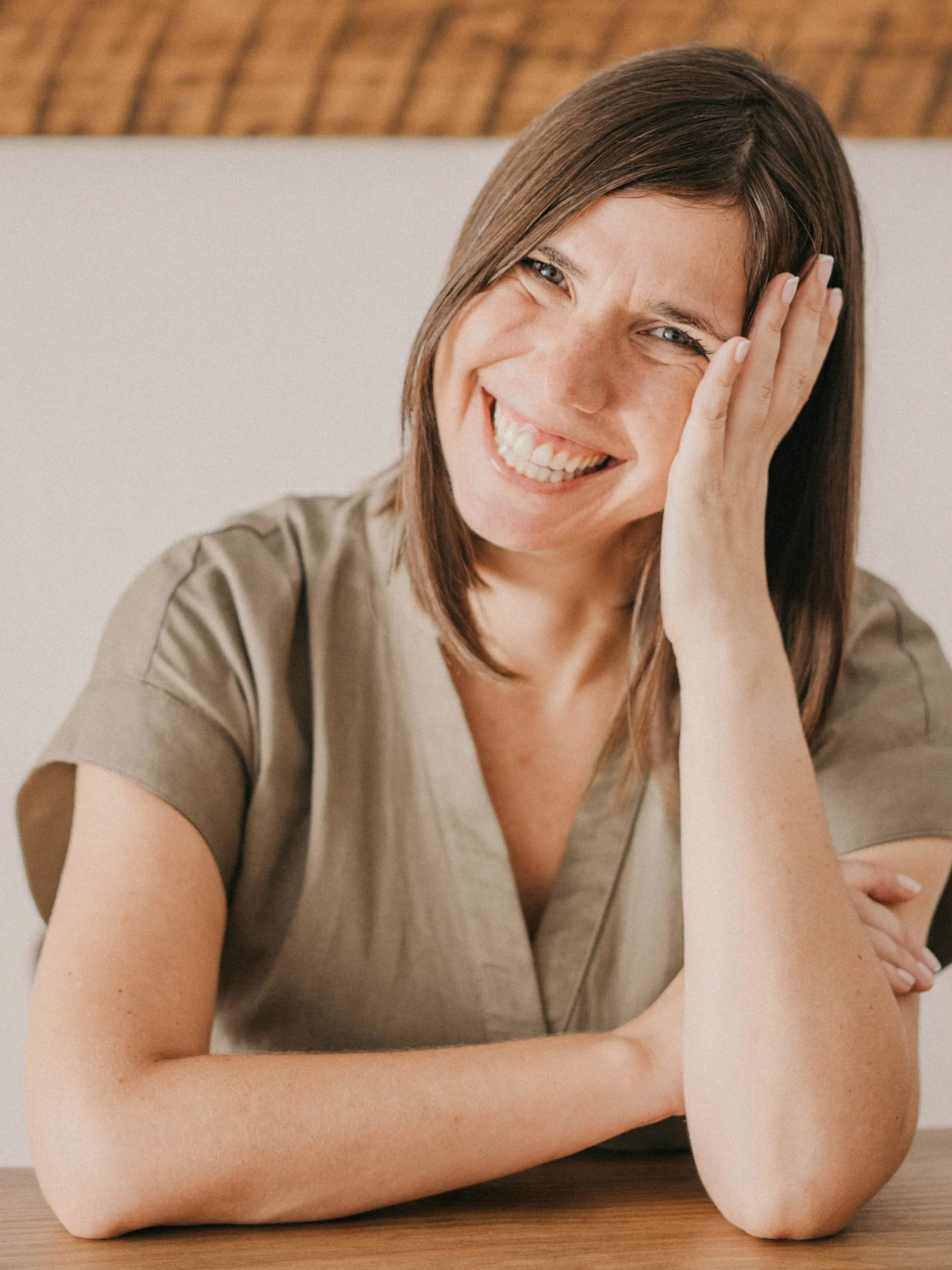
Laura del Mar Jiménez Pereta
My only choice for a degree when I applied to university was Psychology, so you can already guess what has always fascinated me.
I was born in Barcelona into a family where books surrounded me from a very early age, and an interest in understanding people, why they behave the way they do, how to deal with what they feel, is something that always stirs something in me.
I studied Psychology at Blanquerna (Ramon Llull) and, in my third year, I was able to experience what for many at that age is an adventure: going on Erasmus to Italy. And like most people I know who have done an Erasmus, it was one of the best years of my life. Laughter, friends, hugs, goodbyes… pure emotional intensity. It gave me a freedom I had not been able to experience any other way. To be who I was at that moment. To not carry labels stuck on from all the previous years.
After continuing my training, as happens to many of us, I felt lost, so I went backpacking through South America for three months. I have been lucky enough to travel the world since I was small, and I feel that this part of me sharpened my curiosity and swept away the prejudices society tries to instil in us, because suddenly what I thought of as valid starts to be questioned. Shortly afterwards, looking for my place in the world, I moved to London. First with the aim of improving my English, and I started working as a nanny, one of the powerful lessons my ego had to deal with. In Barcelona I was already working as a psychologist in a hospital, and I had got used to defining myself by what I did, so not practising psychology completely threw my ego off balance.
I decided to keep training, of course, and began a four-year master’s in integrative psychotherapy.
I had always protected myself with language, being able to explain what was happening to me emotionally with words and concepts. Although my English was very good, I could not express myself like my native colleagues or those who had lived in the UK for many years, so this barrier inevitably led me to connect with that feeling of being a child surrounded by “bigger” adults “who knew more”. This was a direct journey to connecting with my inner child. With her vulnerability and her limitations.
It helped me connect with my body, since words were no use to me, and to let myself be supported by my colleagues in that fear. Groups gave me the concept of common humanity (which I did not know had a name at the time): recognising that what happens to me happens to all of us.
After seven years, I felt my cycle in London was coming to an end. I came back, and the reverse culture shock also took its toll: coming back as a different person from the one who left, meeting people who expected me to still be my former self.
I kept training in trauma, person-centred psychotherapy and so on, but the most powerful master’s came later: motherhood. It has undoubtedly been a before and after for me. As if all the previous work I had done suddenly accelerated. As if what I used to doubt suddenly became clear.
And with all this story, I am the psychotherapist you have in front of you. With my vulnerabilities and my strengths. Holding out my hand to support you in whatever you need.
Why Calma de Ser was born
A project born from a shared way of understanding psychotherapy
Our relationship began in 2010 on a sofa in a flat in Gràcia. Since then we have shared a profession, learning, life changes, motherhood and many conversations about how we wanted to support the people who came to our practices.
We had both developed our professional careers individually. Over time, our practices grew and a shared need also appeared: to leave part of the loneliness behind and build a project with an identity, a perspective and a purpose that went beyond ourselves.
We wanted to create a space where different professionals could share knowledge, experience and solid clinical practice.
A project able to bring together different specialities on one shared human and clinical foundation, and to create new services, groups, training and resources that could reach more people, beyond individual therapy.
That is how Calma de Ser began.
It was not born only from a business idea. It was born from a relationship of trust, a shared perspective and the wish to support people better.
Integrative, relational and human psychology
We work from a clinical, humanistic and integrative perspective.
This means we do not focus only on the symptom, but also on what that symptom may be expressing, how it relates to your story, how it appears in your relationships and what you need in order to move through it differently.
We understand each person as an inseparable whole of body, emotion, thought, history, relationships and context.
That is why we do not use general formulas or apply the same path to everyone. We bring together different approaches and therapeutic tools according to what each process needs.
We believe in the value of the therapeutic relationship, presence and listening. But behind every session there is also training, professional analysis, supervision and an intervention designed for you.
We do not look for quick fixes or superficial changes.
We seek to understand what is happening and to support you towards real, deep and lasting change.
Conocer nuestro enfoque y cómo trabajamos →What it means to support with calm
Listen, understand, guide and respect your timing. Pausing does not mean standing still
Supporting with calm is not about going slowly as a rule, nor about avoiding what is hard.
It is about creating the conditions needed to look at what is happening without feeling judged, pressured or reduced to a problem.
For us, supporting with calm means:
Listening
Giving space to what you are living without reducing you to a symptom or rushing to interpret your story.
Understanding
Looking with curiosity at how you learned to protect yourself, what strategies helped you at other times and how they may be limiting you today.
Connecting
Helping you recognise what you feel, what you need and what you want, recovering a more authentic relationship with yourself and with others.
Guiding
Helping you tell apart what belongs to the past from what is happening in the present, so that you can widen your possibilities for choice.
Respecting your autonomy
It is not about pushing you or telling you how to live. The process is built with you, respecting your boundaries, your timing and your ability to decide.
Working with intention
Every process has a clear but not rigid therapeutic direction. We work by bringing together what you think, what you feel and what happens in your body.
Sometimes we start from understanding and words to approach inner experience. Other times, we start from bodily sensations, emotion or the activation of the nervous system in order to make sense of what is happening.
We adapt to what each person needs at each moment. Because understanding is important, but it is not always enough: we also need the body to be able to live a different experience.
Calm does not mean not feeling. It means being able to feel with more safety, understanding and resources.
Professionals with different specialities and a shared perspective
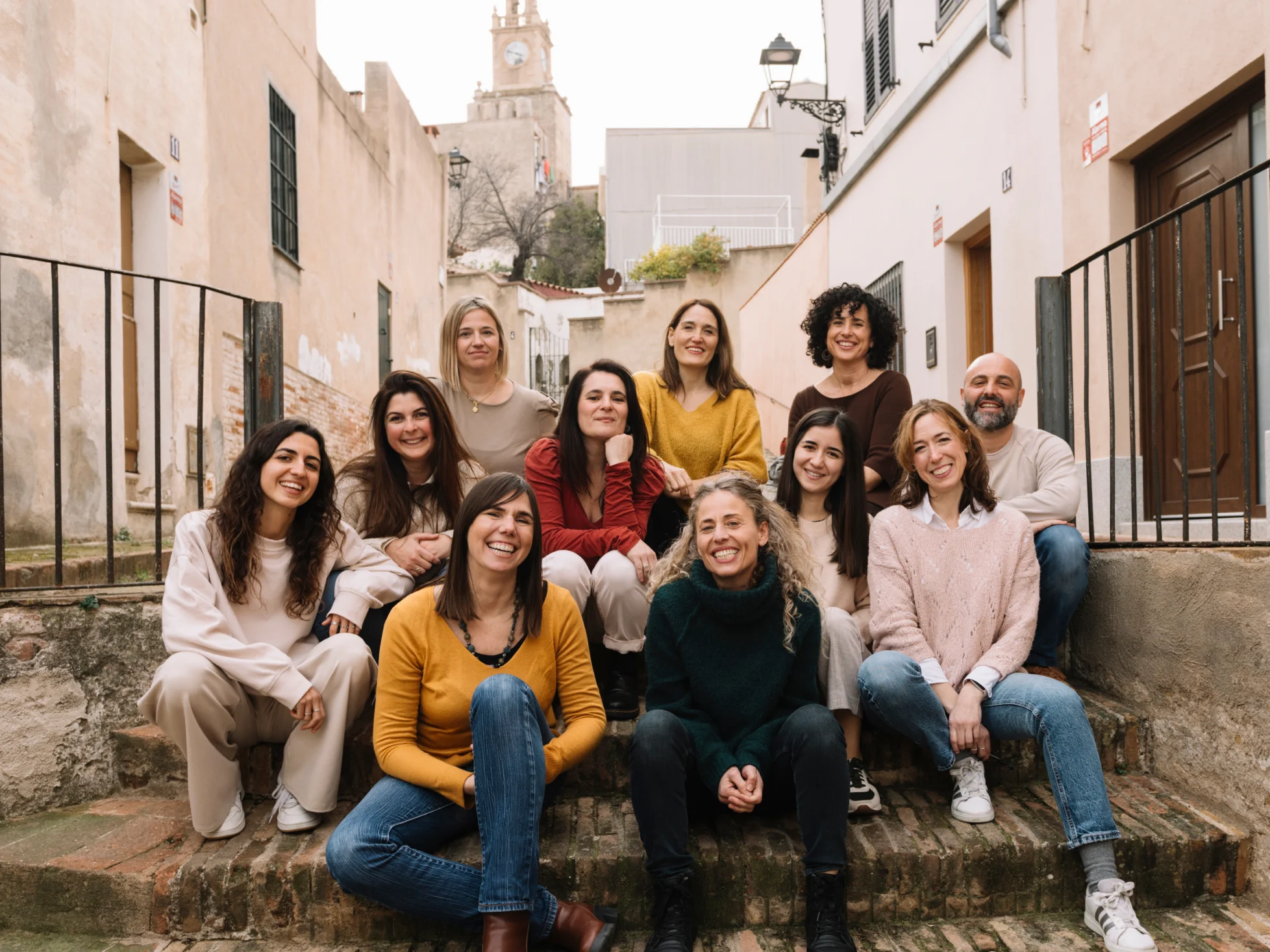
Calma de Ser has grown, and today it is much more than the two of us.
We are a team of psychologists, psychotherapists and professionals specialising in different stages of life and areas of support.
We work with adults, children, adolescents, mothers and fathers, couples and families.
Each professional brings their experience, their training and their own particular way of being in therapy. At the same time, we share a common foundation: an integrative, relational, respectful and non-pathologising perspective.
It matters to us that you find the right person to support you, not only because of their speciality, but also because of the kind of therapeutic bond that can be built.
How we work
First assessment visit, internal referral and personalised support
Support designed for you from the very first step
You do not need to know which professional to choose, nor to be clear about what kind of therapy you need.
We offer in-person therapy in El Masnou and online sessions, so that you can choose the format that best fits your moment and your needs.
In individual processes we always begin with a first assessment appointment. It is a brief meeting (25 minutes) in which we talk about what is happening to you, answer your questions and begin to understand what kind of support can help you.
This first meeting is not just a formality.
Sometimes, being able to put in order what you are living, give a name to what is happening and receive initial professional guidance already brings a small relief.
After the assessment, we think about which psychologist or psychotherapist on the team may be the best fit for you, according to your situation, your needs, your availability and the kind of process you want to begin.
If you decide to continue, the assigned professional will contact you to begin the therapeutic process.
In couples therapy, family therapy and neuropsychology, the starting process is different. In these cases, we gather the necessary information beforehand and put you directly in touch with the specialist professional.
We will go step by step.
Get to know Calma de Ser better
Our team
Learn about the specialities, background and way of supporting people of the professionals who work with Calma de Ser.
Conocer a las profesionales →How we work
Learn how we carry out the first assessment, how we choose the professional and how we approach each therapeutic process.
Conocer cómo trabajamos →Fees
See the prices of the first assessment, psychotherapy and the different services at Calma de Ser.
Consultar las tarifas →Frequently asked questions
Find answers about the formats, the length of sessions, confidentiality and starting therapy.
Ver las preguntas frecuentes →Work with us
Learn about the opportunities for professional collaboration and the vacancies available at Calma de Ser.
Ver oportunidades de colaboración →Choose how you want to start
First assessment appointment
A first 25-minute meeting to hear your situation, answer your questions and point you towards the right kind of support.
In-person therapy
Discover in-person psychological care at Calma de Ser in El Masnou.

Online therapy
Find out how online therapy works and which ages and types of support it is available for.