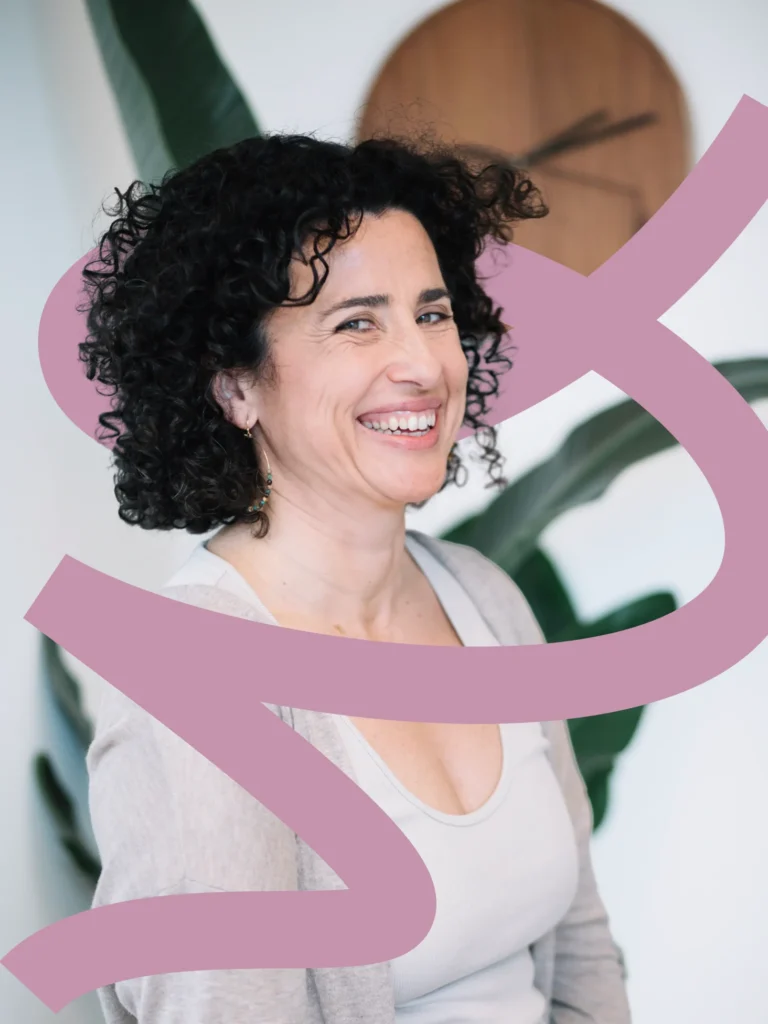
I am a registered health psychologist and FEAP-accredited psychotherapist, with more than nineteen years of experience supporting people at different moments of their lives.
If I had to explain my way of working from Transactional Analysis, I would say I am a kind of life-script analyst. I am interested in understanding how our earliest experiences, our relationships and the decisions we make in order to adapt gradually build a way of feeling, thinking and relating.
Sometimes that script shows up in patterns that repeat, in relationships that keep taking us to the same place, or in what we call psychological games: dynamics that are set off almost without our noticing and which, although they made sense at some point, may cause suffering today.
In therapy we seek to recognise that script, understand how it was formed and create new possibilities so that you can relate to yourself, to other people and to your life from a freer place.
My perspective starts from the idea that everything we do has a meaning within our story and our development. Even the responses that may seem disproportionate, rigid or hard to understand today were usually built from specific experiences, as a way of adapting, protecting ourselves or preserving important bonds.
Over the course of my career I have worked with people with eating disorders and with women who have survived gender-based violence. These experiences allowed me to deepen my understanding of the relationship between trauma, identity, the body, relationships and ways of surviving.
Work with trauma now holds a central place in my way of supporting people. I am increasingly interested in understanding not only the story a person can tell in words, but also how that story remains present in the body, in the emotions and in the way their nervous system responds to certain situations.
My training in neuroscience and my interest in how the nervous system works have led me to gradually bring in a more body-based perspective. Sometimes we understand perfectly why something happens to us and still keep reacting from fear, blockage, tension or disconnection. In those moments, working only from reason may not be enough.
For this reason, in 2026 I began training in NARM, a model focused on relational and developmental trauma that brings together work with identity, the body, the nervous system and the survival strategies we learned in order to adapt. This perspective allows me to keep deepening my understanding of how early experiences can become beliefs about who we are and automatic ways of relating to ourselves and to others.
I currently support mainly adults at very diverse moments in life: trauma, anxiety, personal crises, grief, change, relationship conflicts, feeling stuck, difficulty setting boundaries, or stages in which they feel something no longer fits and they need to understand themselves differently.
My training brings together relational and integrative Transactional Analysis, the trauma approach, EMDR, Brainspotting, Focusing, brief systemic therapy, neuroscience and Neuro-Linguistic Programming. I am currently under contract to certify as a Certified Transactional Analyst (CTA), and I continue to extend my training in NARM.
I also devote an important part of my work to training and outreach. For me, bringing psychology closer to everyday life, making it understandable and sharing tools that help people look at themselves with more awareness is also part of my way of supporting people.
I see therapy as a close, safe and committed space. A place where you can understand why you are the way you are without feeling defined by your story, recognise your resources and begin to make decisions more connected with who you are today.