
Therapy for adolescents in El Masnou and online
Psychology for adolescents
A space to understand what is happening, take care of the family bond and go through this stage with more clarity.
A 25-minute first assessment with the caregivers, without the adolescent present.

when you feel you no longer recognise your son or daughter
Adolescence can bring distance, irritability, withdrawal or changes that are hard to understand. Sometimes they are part of growing up; at other times they express a distress that needs attention.
At Calma de SER we offer psychology for adolescents in person in El Masnou and online. We create a space of their own where the adolescent can feel heard without judgement, understand what is happening to them and find safer ways of relating to themselves and to those around them.
We also support mothers, fathers and caregivers, because adolescence needs autonomy, but also adults who are available, clear and able to hold.
therapy for adolescents can help when…
- Anxiety, fears, repetitive thoughts or difficulty regulating themselves appear.
- There is sadness, irritability, mood changes or withdrawal.
- There are problems with self-esteem, insecurity, self-demand or body image.
- Family conflicts, communication problems or difficulty setting boundaries arise.
- You notice a lack of motivation, a block or a significant change in school performance.
- There are difficulties with friendships, peer pressure, identity or a sense of belonging.
- Sleep, eating, screen use or their relationship with their body change in a worrying way.
- Impulsivity, substance use, self-harm or other risk behaviours appear.
- There is a distress that is hard to explain and is starting to affect their daily life.
You do not need to wait until the situation is serious. When a change lasts over time, causes suffering or starts to affect school, rest, eating, relationships or family life, asking for guidance can help you understand what is happening and how to support it.
what we can work on in therapy
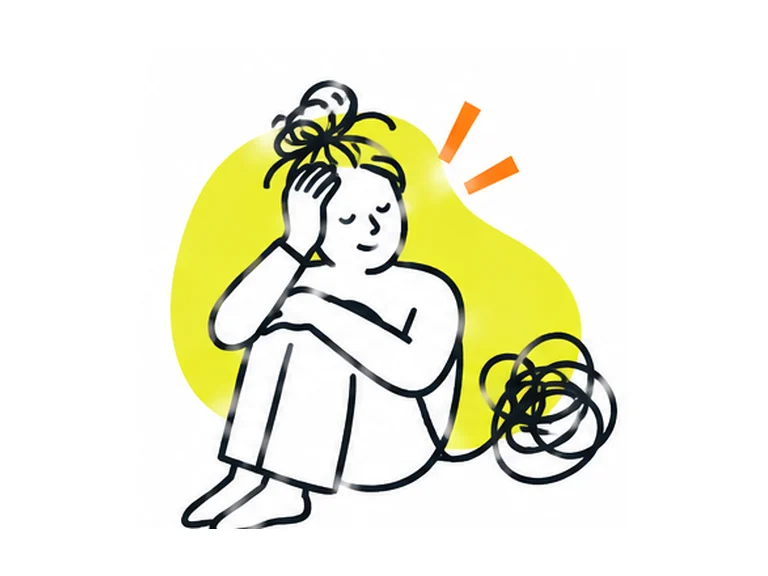
Anxiety and emotional regulation
Therapy for adolescents can help them identify which situations overwhelm them, understand their emotions and develop resources to regulate themselves.
We work on anxiety, fears, rumination, irritability, impulsivity and other difficulties related to managing emotions.

Self-esteem, identity and relationship with the body
We support processes related to insecurity, self-demand, comparison, fear of not fitting in, identity, orientation, the body and a sense of belonging.
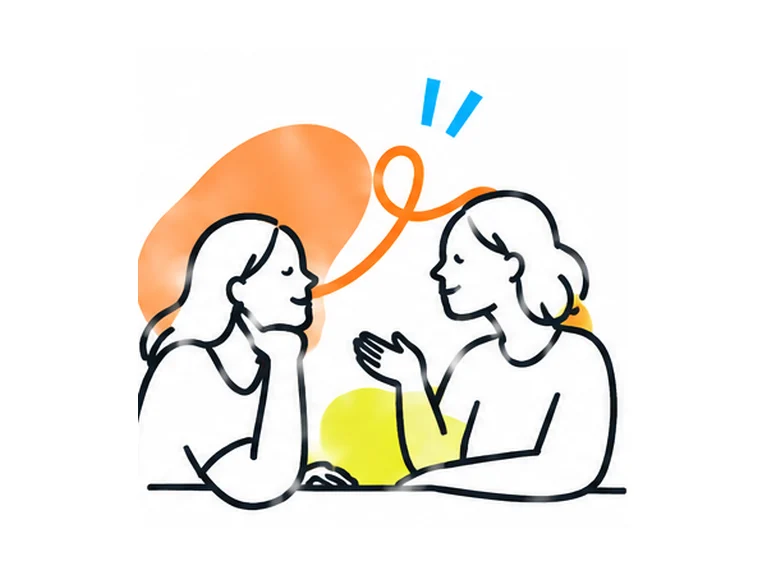
Relationships, peer pressure and isolation
We work on difficulties with friendships, first romantic relationships, peer pressure, loneliness, isolation and difficulty setting boundaries.
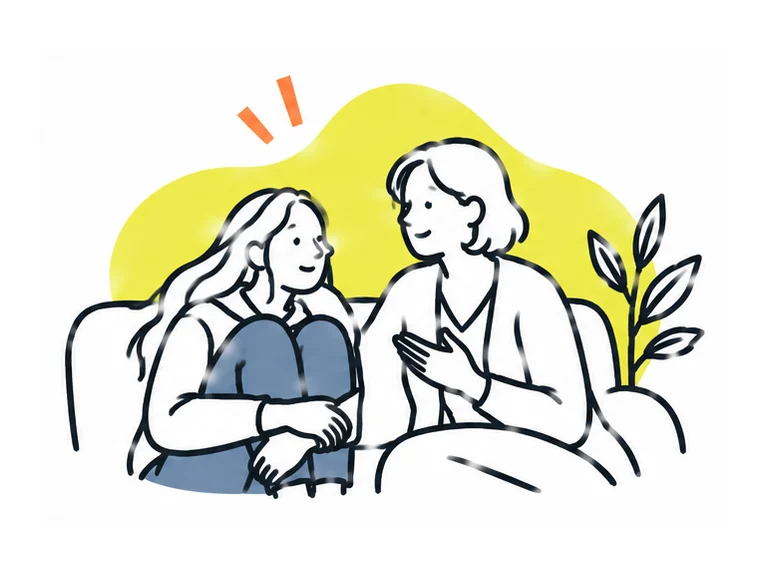
Family and communication
Family conflicts in adolescence do not always mean the bond has been lost. Therapy can help each side understand what they need and find safer ways to communicate and live together.

School, motivation and organisation
We support blocks, lack of motivation, fear of failure and the emotional impact of school difficulties.
When the main focus is on learning, attention or executive functions, we can consider psychopedagogical support or a more specific assessment.
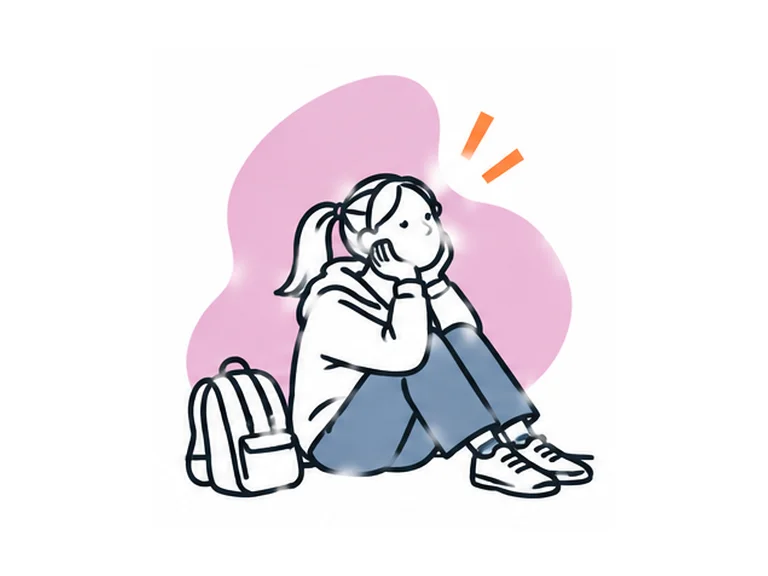
Risk behaviours and difficult experiences
We also support losses, break-ups, painful experiences, substance use, self-harm and other situations that require a professional assessment.
When there is immediate risk, outpatient psychological care does not replace emergency services.
how we support
A space of their own for the adolescent, without leaving the family alone
The therapeutic process adapts to the age, personality, developmental stage and needs of each adolescent.
We do not expect them to fit a rigid way of doing therapy. We adapt the language, the tools and the pace of the process so that they can find their own way to take part and feel safe.
Work with the adolescent
We offer a private, confidential space where they can talk about what is happening to them, even when they do not yet know how to explain it.
Sometimes they will need to talk. At other times it will be easier to start with a specific situation, with what they feel in their body, with a song, an image, writing, drawing or whatever is part of their way of being in the world.
We do not ask them to arrive with clear ideas or to open up from day one. Trust is built little by little.
Through the therapeutic bond, we help them to:
- Recognise and understand their emotions.
- Identify which situations overwhelm them.
- Understand their ways of protecting themselves.
- Put words to what they feel and need.
- Tell their own wishes apart from other people’s expectations.
- Develop resources to regulate themselves.
- Build a more secure view of themselves.
- Make decisions with more autonomy.
- Find new ways of relating and facing difficulties.
We do not focus only on making the symptom disappear. We want to understand what it is trying to express or resolve, and help them find other, safer ways to take care of what they feel.
This way of working draws on a systemic, integrative, respectful and non-pathologising perspective: understanding the adolescent within their story, their bonds and the different contexts of their life.
Shared goals, even when they are not the same
It is common for mothers and fathers to arrive with some goals while the adolescent has others.
Perhaps the family wants them to study again, stop isolating themselves or communicate more. Meanwhile, they may need to feel less pressured, understand their anxiety or have a place to talk without feeling they are letting anyone down.
We do not expect everyone to arrive with the same view.
During the first sessions we will listen to the needs of each side and build a work plan that respects the adolescent’s space and, at the same time, takes the family’s concerns into account.
The goals will be clear, but also flexible. They will be reviewed as the process advances and new needs appear.
Family, school and therapist form a network
Therapy does not happen only inside the consulting room.
That is why we always hold a coordination session with the school, to learn how the adolescent is doing and encourage consistent support.
If further coordination is needed, we will discuss it with the family first. We can also coordinate with doctors, psychiatry or other services, always with the appropriate consent.
In-person and online therapy for adolescents
Psychology for adolescents in El Masnou
If you are looking for an adolescent psychologist in El Masnou, you can have the sessions in person at our centre:
- Carrer Fontanills, 15
- 08320 El Masnou, Barcelona
Online therapy for adolescents
Online therapy for adolescents can be suitable when the family lives far away, needs more flexibility or cannot travel easily.
At the first assessment we can advise you on the most suitable format according to the adolescent’s age, needs and circumstances.
See online therapy →First appointment
a first appointment to understand what they need
For adolescents, the first assessment appointment takes place with the mothers, fathers or caregivers, without the adolescent present.
It can be in person or online, lasts 25 minutes and lets us learn:
- What worries you.
- Since when you have noticed it.
- How it is affecting their life.
- What support they may need.
- Which format and professional may be the best fit.
Based on this assessment we can guide you towards psychological therapy for adolescents, family guidance, psychopedagogical support or a more specific assessment.
- 1. You book the first assessment appointment. You choose between in person or online and select the time.
- 2. You tell us what is happening. The first assessment takes place with the caregivers, without the adolescent present.
- 3. We guide you. We assess which kind of support and which professional can best respond to their needs.
Do you have questions before you start?
You can write to us on WhatsApp and ask with no obligation. We would rather answer a question than leave you with it.
Tell us what you need
You do not need to know which therapy or which professional to choose. We will help you find your way.
25 minutes · €36 · In person in El Masnou
Choose a day
Loading the calendar…
Choose a time
Couples therapy has its own process
It does not start with the first assessment appointment: the first step is different. On its page we explain how it works, and you can book directly.
Family therapy has its own process
It does not start with the first assessment appointment: the first step is different. On its page we explain how it works, and you can book directly.
Neuropsychology has its own process
It does not start with the first assessment appointment: the first step is different. On its page we explain how it works, and you can book directly.
how to explain that they are going to therapy
It is common for them to respond at first with rejection, anger or distrust.
It helps to explain that therapy is not a punishment or a way to change them, but a space of their own where they can talk with a professional who will listen without judging them.
It is also important to tell them in advance:
- Where the session will be.
- How long it will last.
- Who will see them.
- That they will have a private space.
- What the limits of confidentiality are.
You can suggest a first session so that they can meet the professional and say how they feel in the space before deciding whether to continue.
other kinds of support for adolescents and families
Family guidance
Not every difficulty requires starting individual therapy straight away.
Guidance for families with adolescents can help you better understand what is happening, review the way you respond and find tools to improve communication, boundaries and family life.
Discover family guidance →
Educational psychology support
When the main difficulty relates to attention, planning, learning or academic autonomy, psychopedagogical support may be advisable.
Discover educational psychology support →
Neuropsychological assessment
If a deeper understanding of their cognitive, attentional, academic or developmental profile is needed, we can consider a neuropsychological assessment.
Discover neuropsychological assessment →
- Therapist
Marta Ros Giménez
Registered health psychologist and psychotherapist · Child, adolescent and adult psychotherapy
- Languages
- Spanish · Catalan
- Format
- In person in El Masnou · Online

- Therapist
Tania Plaza Martínez
Systemic therapist · Couples and family therapy · Support for adults and adolescents
- Languages
- Spanish · Catalan
- Format
- In person in El Masnou · Online

- Therapist
Patricia Cuairan Martínez
Registered Health Psychologist · Integrative psychotherapy with adults, children, adolescents and families · Coordinator of the first assessment sessions
- Languages
- Spanish · Catalan
- Format
- In person in El Masnou · Online
what adolescent distress may be expressing
During adolescence, distress is not always expressed in words. It can appear as anger, withdrawal, lack of motivation, changes in performance, difficulties with sleep or food, problematic screen use or risk behaviours.
Looking beyond the behaviour does not mean justifying everything or giving up on boundaries. It means trying to understand what emotion, need or form of protection may lie behind it, so as to act with more clarity and less reactivity.
If there is immediate risk
Self-harm is a sign of suffering that requires professional assessment. If there is immediate risk, injuries that need care, a suicide plan, or you cannot guarantee their safety, call 061 or 112 or go to the emergency department. In Spain the 024 helpline is also available, but it does not replace emergency care. This advice is consistent with the official resources of Canal Salut and the Spanish Ministry of Health.
frequently asked questions
Does my son or daughter have to want to go to therapy?
We often meet adolescents who, at first, do not want to come.
It is understandable: they do not know the professional or the centre, they may feel embarrassed or distrustful, or it may feel like a change they did not choose.
That is why we usually recommend that families try to agree on a first session. Not as a commitment to continue, but as a chance to meet the therapist, see how they feel in the space and decide afterwards with more information.
It is important to listen to their refusal and not present therapy as a punishment or a way to correct them.
At the same time, when the distress worries us, we adults also have the responsibility to offer care that they may not yet be able to value or ask for themselves.
We do not always want to go to an appointment or face something that unsettles us, but that does not mean we cannot need help. The idea is to support them with respect, explain why the situation worries you and make it easier for them to have a first experience before deciding how to continue.
Is the first appointment with the adolescent?
No. The first assessment appointment takes place only with the mothers, fathers or caregivers, without the adolescent present.
It can be in person or online and lasts 25 minutes.
This meeting lets us understand the situation, advise you on the kind of support and choose the professional who can best support them.
In this way we take care of their entry into the process: they do not have to go through two different professionals or explain several times what is happening to them, but meet directly the therapist or professional with whom they will start.
Will the therapist tell us everything they talk about with our son or daughter?
No. For therapy to work, the adolescent needs to feel they have a private, confidential space of their own.
That does not mean the family is left out of the process. There will be sessions for mothers, fathers or caregivers to help you better understand what is happening, offer you guidance and give you tools to support your son or daughter in a more attuned way.
The professional will share with the family whatever is necessary to take care of the process, guide the support or act in a situation of risk.
From the start, the limits of confidentiality and how the adolescent’s individual space will be combined with the family work will be clearly explained.
Is there any situation in which confidentiality is broken?
Yes. Confidentiality has limits when there is a situation of risk for the adolescent or for other people.
If the therapist detects a risk of serious self-harm, suicidal ideation, violence, abuse or another situation that compromises their safety, it will be necessary to inform the caregivers and activate the necessary resources.
Whenever possible, the professional will first talk with the adolescent to explain what information must be shared and why.
The aim is not to break their trust, but to protect them and help them understand that asking for support is also part of taking care.
Do mothers, fathers or caregivers take part in the process?
Yes. The form and frequency will depend on the age and the needs of each case.
There will be times when the professional needs to meet you to better understand the situation, offer you guidance, review how the process is developing or help you respond to a specific difficulty.
These sessions are part of the treatment. They are not only spaces to receive information, but to help you gain tools and review how you can support them.
At the same time, we will protect the private, confidential space the adolescent needs in order to trust the therapy.
What is the difference between the two kinds of parenting guidance?
In parenting guidance for adolescence, the focus is mainly on understanding your son’s or daughter’s needs and offering tools to the caregivers.
In parenting guidance with a relational and couple perspective, we also work on how worry, differences in parenting and the way you face this stage are affecting your relationship.
You do not need to know in advance which one fits best. We can guide you at the first appointment.
What is the difference between psychopedagogical support and therapy for adolescents?
Psychopedagogical support focuses mainly on difficulties related to learning, attention, organisation, planning, reading, writing, comprehension or executive functions.
Therapy for adolescents addresses emotional distress, self-esteem, relationships, behaviour, identity and the situations that are affecting their well-being.
In some cases, both kinds of support can complement each other. The first assessment will help us guide you.
How do we know whether they need therapy, psychopedagogical support or a neuropsychological assessment?
It is not always easy to tell before a first assessment.
When the difficulty relates mainly to emotional distress, behaviour, self-esteem or relationships, we can propose a therapeutic process.
If the focus is on learning, attention, organisation or academic autonomy, psychopedagogical support may be a better fit.
When a deeper understanding of their cognitive, attentional, academic or developmental profile is needed, we can recommend a neuropsychological assessment.
In some cases, these kinds of support can complement each other.
What happens if our goals do not match theirs?
It happens often.
You may be worried about their studies, their isolation or their behaviour, while they may want to talk about a relationship, how they feel about themselves or the pressure they are under.
During the first sessions, the therapist will gather the different views and help build goals that make sense for the process.
It is not about imposing one side’s goals on the other, but about finding a direction of work that takes care of the adolescent and takes the family’s concerns into account.
What if they do not want to explain what is happening to them?
They do not need to be able to tell everything from day one.
Trust is built little by little. The therapist can start by getting to know them, understanding how they experience the situation and creating a space where they do not feel pressured or judged.
Sometimes silence, anger or difficulty talking are also part of what needs to be understood.
The professional will not force them to explain something they are not yet ready for, but will look for ways to get closer and build a relationship from which they can begin to express themselves.
How do we know whether what is happening is part of adolescence or needs help?
Adolescence involves emotional, relational and behavioural changes.
Asking for guidance may be advisable when the distress is intense, lasts over time or starts to affect rest, school, relationships, eating, family life or the way they see themselves.
It is also advisable to seek help when risk behaviours, intense withdrawal, self-harm, problematic substance use or talk of wanting to disappear or not wanting to live appear.
You do not need to wait until the situation is serious to ask for help.
What do we do if they self-harm?
Try to stay calm, even if it is hard, and approach them without judging, punishing or demanding an immediate explanation.
You can tell them that you have seen their suffering and that you want to help. Self-harm is usually a way of regulating very intense emotional distress, but it is a risk behaviour and needs a professional assessment.
It is also important to ask whether they have thought about dying or hurting themselves more seriously. Asking directly does not cause suicidal behaviour; it helps understand the risk better and opens a space for them to talk.
When there is immediate risk, injuries that require medical care, a suicide plan, access to the means to carry it out, or you cannot guarantee their safety, you must go to the emergency department or call 061 or 112. Outpatient therapy does not replace urgent medical care.
Can you coordinate with the school or with other professionals?
Yes. As part of the process, we always hold a coordination session with the school to learn how the adolescent is doing in that context and encourage consistent support between the family, the school and the therapy or psychopedagogical support.
If later on we consider that further coordination may be needed, we will discuss it first with the mothers, fathers or caregivers.
When useful, we can also coordinate with doctors, psychiatry or other services that are supporting them, always with the appropriate consent.
If we are separated and one parent does not agree, can they start?
Even if custody belongs to only one of the parents, what we must take into account is who holds parental authority.
When parental authority is shared, we need the consent of both parents before starting the therapeutic process, the psychopedagogical support or the assessment with the minor.
If one of the parents does not agree, we cannot start until there is an agreement between both or a court ruling that authorises the support or assigns this decision to one of them.
If there is a special circumstance or a previous court ruling, we will need to review the relevant documents before deciding how to proceed.
you can begin by understanding what is happening

First assessment appointment
A first 25-minute meeting to hear your situation, answer your questions and point you towards the right kind of support.

In-person therapy
Discover in-person psychological care at Calma de Ser in El Masnou.

Online therapy
Find out how online therapy works and which ages and types of support it is available for.